
Why Emotional Availability Matters in Marriage
 By Sara Freed · June 13, 2025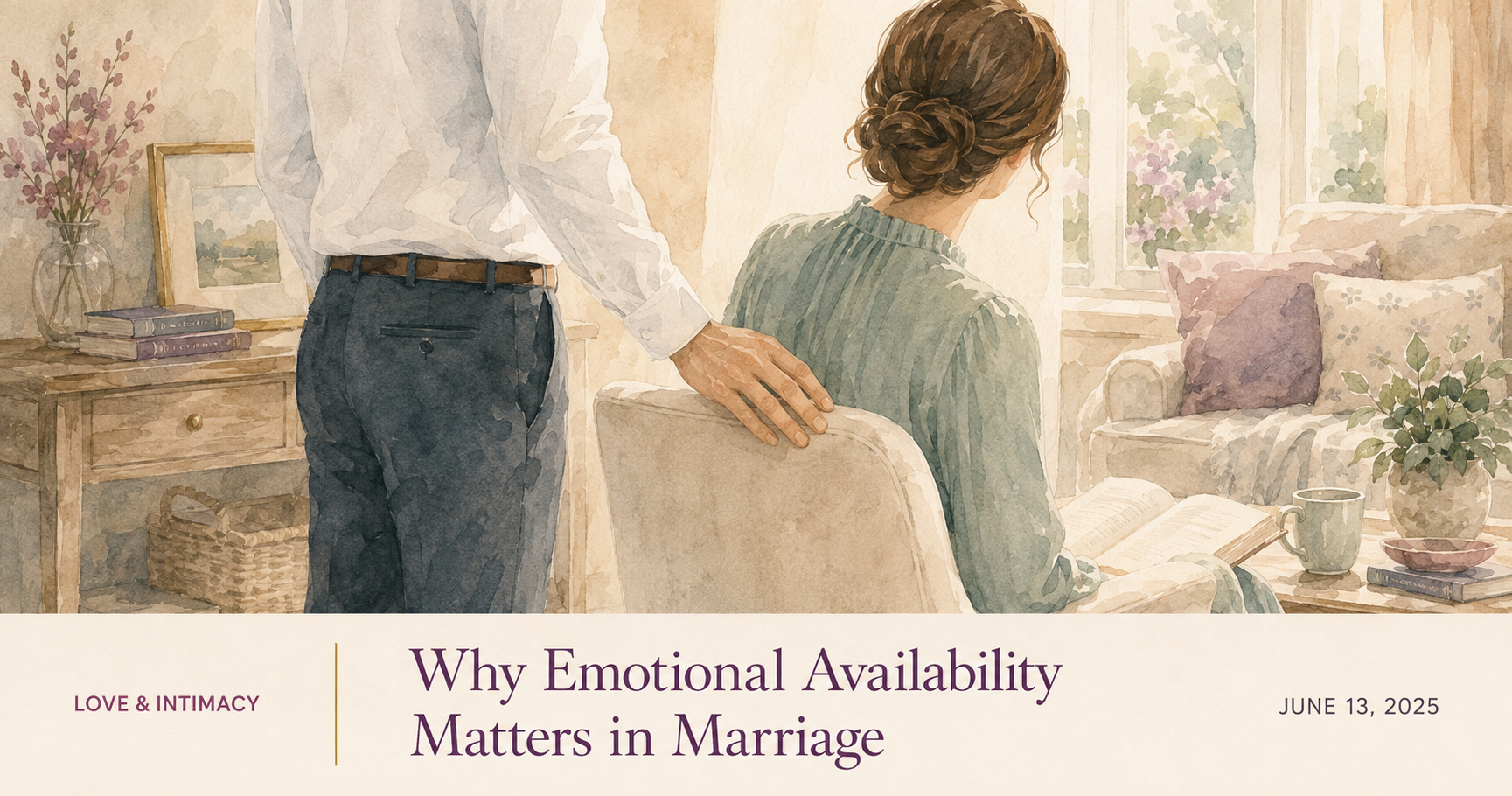
What does it mean when a spouse is present but emotionally unavailable?
A spouse can be physically present while feeling emotionally closed, guarded, or unreachable. Emotional availability means being willing to notice, share, and respond to inner experience. Reconnection begins with safety and curiosity, not pressure.
A couple once sat in my office. They had been married for over 15 years, raising a beautiful family and being active in their community. From the outside, they seemed to be doing just fine. But inside? They felt like strangers living under the same roof. “I’m here,” the wife said, arms folded tightly. “We talk. We go to simchas. We’re not yelling. But I feel like I’m in this alone.” The husband nodded. “I don’t even know what she wants anymore. I’m doing everything right. What more can I do?” They weren’t slamming doors. They were still sharing meals, parenting together, and functioning. The door was open. But the heart was closed.
What Does It Mean to Be “Closed”? In marriage, 'closed' doesn’t always look like conflict. Sometimes it looks like silence. Disinterest. Numbness. You may live in the same home but stop reaching for each other emotionally. Conversations become surface-level. The warmth disappears—not because of one explosive fight but because of slow, subtle shutting down. Why does this happen? Because when we feel hurt or unheard over time, we build walls to protect ourselves. And those walls work—sort of. They keep out pain. But they also keep out love. It Doesn’t Happen All at Once The closed heart doesn’t slam shut in one moment.
It often happens like this: - A comment that stings—but never gets discussed. - A repeated behavior that triggers pain—but gets swept under the rug. - An emotional need that goes unmet—until we stop asking for it. We tell ourselves, “It’s not worth the fight.” So we say nothing. But that silence builds resentment. Over time, we stop being vulnerable to each other. We show up physically, but emotionally, we check out. The Myth of “We’re Fine” Many couples in this state convince themselves they’re “fine.” After all, they’re not yelling. No one’s threatening divorce.
There’s food on the table, kids doing homework, and a Shabbos table that looks picture-perfect. But behind the routine is a marriage that’s drifting. And here’s the truth: Peace isn’t the same as connection. You can have a quiet home and still feel utterly alone. Signs the Heart Has Closed How do you know if your marriage has fallen into this pattern? Here are a few red flags I see often: - You no longer share personal thoughts or dreams. - You avoid meaningful conversations because “it’s easier that way.” - One or both of you feel safer turning to friends, kids, or distractions than to each other. - You feel invisible in your marriage.
If any of this feels familiar, don’t panic. You're not alone—and you’re not doomed. But it’s time to pause and ask: Do we want more than this? How to Reopen the Heart The good news is: hearts can reopen. Even when it’s been months or years since you’ve felt truly connected. But it doesn’t happen by accident. It happens by intention. Here are three steps I walk couples through when they want to move from functioning to thriving: 1. Name the Distance Don’t pretend it’s fine if it’s not. Be brave enough to say: “I miss us.” Not to criticize. Not to blame. To acknowledge the space that’s grown between you.
This kind of honesty, when spoken gently, can be a powerful invitation back to closeness. 2. Start Small and Safe You don’t rebuild emotional intimacy overnight. But you can begin with small moments of connection. A question like: “What was something hard about your day?” Or: “Is there anything I did this week that felt off to you?” These open the door to honest conversation, without pressure. 3. Repair the Tiny Tears The strongest marriages aren’t those with no conflict—they’re the ones where partners learn to repair after disconnection. That means learning to apologize sincerely. To revisit past hurts with compassion.
To say: “I didn’t realize that landed so painfully. Thank you for telling me.” This kind of repair builds trust, and slowly, hearts start to open again. A Word to the “Emotionally Available” Spouse In many marriages, one partner longs for emotional depth while the other withdraws. If you're the one who wants more closeness, you may feel like you're carrying the relationship alone. That’s exhausting—and painful. You may even be tempted to shut down in return. To say, “If he doesn’t care, why should I try?” But here’s the thing: your sensitivity is not a weakness. It’s a strength.
The fact that you want more means your heart hasn’t fully closed. Use that desire—not to nag or shame—but to lead with openness. Gently model what emotional connection looks like. Often, when one partner softens, the other eventually follows. You Don’t Need to Stay Stuck A closed heart doesn’t mean a closed marriage. It means there’s healing to do—and connection waiting on the other side. Because your marriage deserves more than just an open door. It deserves an open heart—and the courage to begin again, even if it’s just with one small step today.
Sometimes, the quietest moments—an honest word, a soft question, a willingness to try—can lead to the most profound healing.
Frequently Asked Questions
How can I invite emotional openness?
Choose a calm moment, describe the distance without accusation, and ask one gentle question about what makes connection feel difficult.
How can couples apply this insight?
Begin with one calm conversation and one small, repeatable action. Focus on the shared pattern rather than blaming either spouse.
Keep going, together
Full access to every plan, practice and check-in in the Emotional Marriage Method. Small steps you can actually do, in the middle of a real week.