
What Is Imago Dialogue? A Marriage Communication Tool
 By Sara Freed · July 4, 2025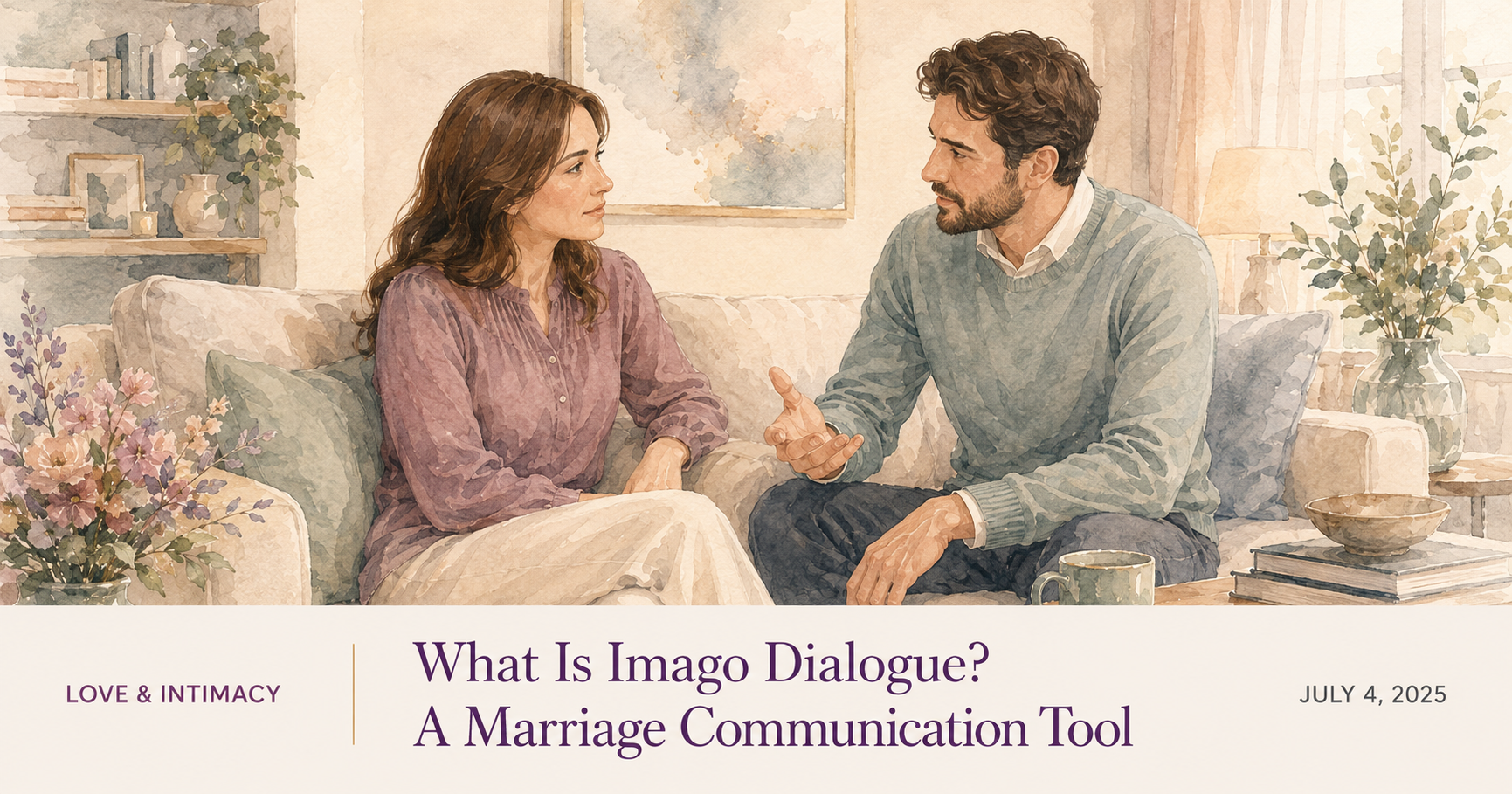
What is Imago Dialogue in marriage?
Imago Dialogue is a structured conversation process that helps one partner speak while the other mirrors, validates, and empathizes before responding. The slower structure can reduce defensiveness and help both spouses feel more accurately heard.
Communication is everything. As a marriage coach working with couples from all walks of life—including many in the frum community—I’ve seen how even strong marriages can unravel when communication breaks down. One of the most transformative tools I share with couples is the Imago Dialogue: a structured method of communication that nurtures empathy, connection, and understanding. Think of it as a spiritual practice for your marriage—like a mitzvah, but for your relationship. What Is Imago Dialogue? Developed by Dr. Harville Hendrix and Helen LaKelly Hunt, Imago Dialogue follows a simple three-step process: Mirroring, Validation, and Empathy.
The goal isn’t to “win” an argument or fix a problem right away. Rather, it’s about deeply hearing each other—perhaps for the first time in a long time. Why Is It So Powerful? Too often, couples talk at each other rather than to each other. This leads to frustration, hurt feelings, and emotional distance. Imago Dialogue creates a safe space where both partners feel heard and respected—an especially important skill in communities where communication styles can range from expressive to reserved. A Real-Life Scenario: Rabbi Yossi & Rivka Rabbi Yossi and Rivka had been living under the same roof but feeling miles apart.
Yossi, warm and outgoing, loved sharing his thoughts. Rivka, quiet and devout, often felt overlooked—especially regarding her traditional views. Their biggest issue? Yossi felt dismissed during community decisions. Rivka felt he made light of her convictions. In our sessions, we introduced the Imago Dialogue. With a little humor and a lot of heart (picture your local shul’s social hall—minus the challah crumbs and plus some emotional cleanup), we practiced step by step. How It Worked 1.
Mirroring Yossi shared: “I feel like my opinions don’t matter when it comes to our involvement in the community.” Rivka mirrored: “So what I’m hearing is, you feel like your input isn’t taken seriously.” This ensured that Yossi felt heard and understood. 2. Validation Rivka continued: “It makes sense that you’d feel that way, given how much you care about the community.” Validation means acknowledging your spouse’s perspective, even if you don’t entirely agree. 3. Empathy Finally, Rivka added, “I imagine it feels lonely when you think I’m not valuing what you bring to the table. That’s not my intention at all.” Yossi softened.
Rivka felt respected. The dynamic began to shift. They even joked that Imago should be added to the 613 mitzvos: “The sacred art of listening!” Try It at Home: 4 Simple Tips - Practice active listening. Try the “mirror” step even during everyday disagreements. - Create a safe space. No phones, no kids, just you and your spouse, ideally once a week. - Don’t rush to fix. Focus on understanding first. Solutions will follow naturally. - Be patient. Like a good soup, good communication takes time—and maybe a little simmering.
If you're thinking, “This sounds lovely, but I’d rather just yell across the table,” remember yelling might be faster, but it’s like eating gefilte fish without horseradish. Unsatisfying. And it is likely to cause tears. Why It Matters in Our Home Our values, such as shalom bayis, kavod, and middos refinement, are at the core. Yet even with these shared values, communication gaps still arise. Many couples are surprised to learn that halachic observance alone doesn’t guarantee emotional closeness. The Torah teaches us to 'know' our spouse, not just in action but in understanding.
Imago Dialogue supports this ideal by helping couples tune into each other’s inner world with care and humility. When we truly listen, we fulfill not just emotional needs, but spiritual ones too. From Habit to Heart Connection One of the most significant shifts I see in couples who practice Imago Dialogue consistently is the move from routine interaction to intentional connection. So much of married life becomes transactional: 'Did you pay the bill?', 'Who’s picking up the kids?', 'We’re out of milk.' Important, yes— but hardly soul-nourishing. Dialogue reintroduces heartfulness.
It reminds couples: underneath the logistics is a person who still wants to feel seen, cherished, and safe. Even five minutes a day of intentional listening can refresh the emotional atmosphere of the home. Final Thought Just as we prepare our homes for Shabbos or our hearts for tefillah, we can prepare our minds to truly listen to our spouse. If we approach our marriage as a sacred partnership—one that deserves investment, curiosity, and growth—then tools like Imago become not just useful, but essential. As we say in Pirkei Avos, 'Who is wise? One who learns from every person.' What if the person we learned most from… was our spouse?
Imago Dialogue isn’t a quick fix, but it is a powerful tool. It can help transform a marriage built on assumptions into one rooted in mutual respect and emotional connection. For couples seeking to strengthen their bond, this method provides a respectful and structured approach to transform everyday tensions into opportunities for growth. After all, what better way to build shalom bayis than through the simple, sacred act of listening?
Frequently Asked Questions
Does validation mean agreeing with my spouse?
No. Validation means recognizing how your spouse’s experience makes sense from their perspective, even when you remember or interpret events differently.
How can couples apply this insight?
Begin with one calm conversation and one small, repeatable action. Focus on the shared pattern rather than blaming either spouse.
Keep going, together
Full access to every plan, practice and check-in in the Emotional Marriage Method. Small steps you can actually do, in the middle of a real week.