
When Compliments Feel Like Pressure in Marriage
 By Sara Freed · June 10, 2025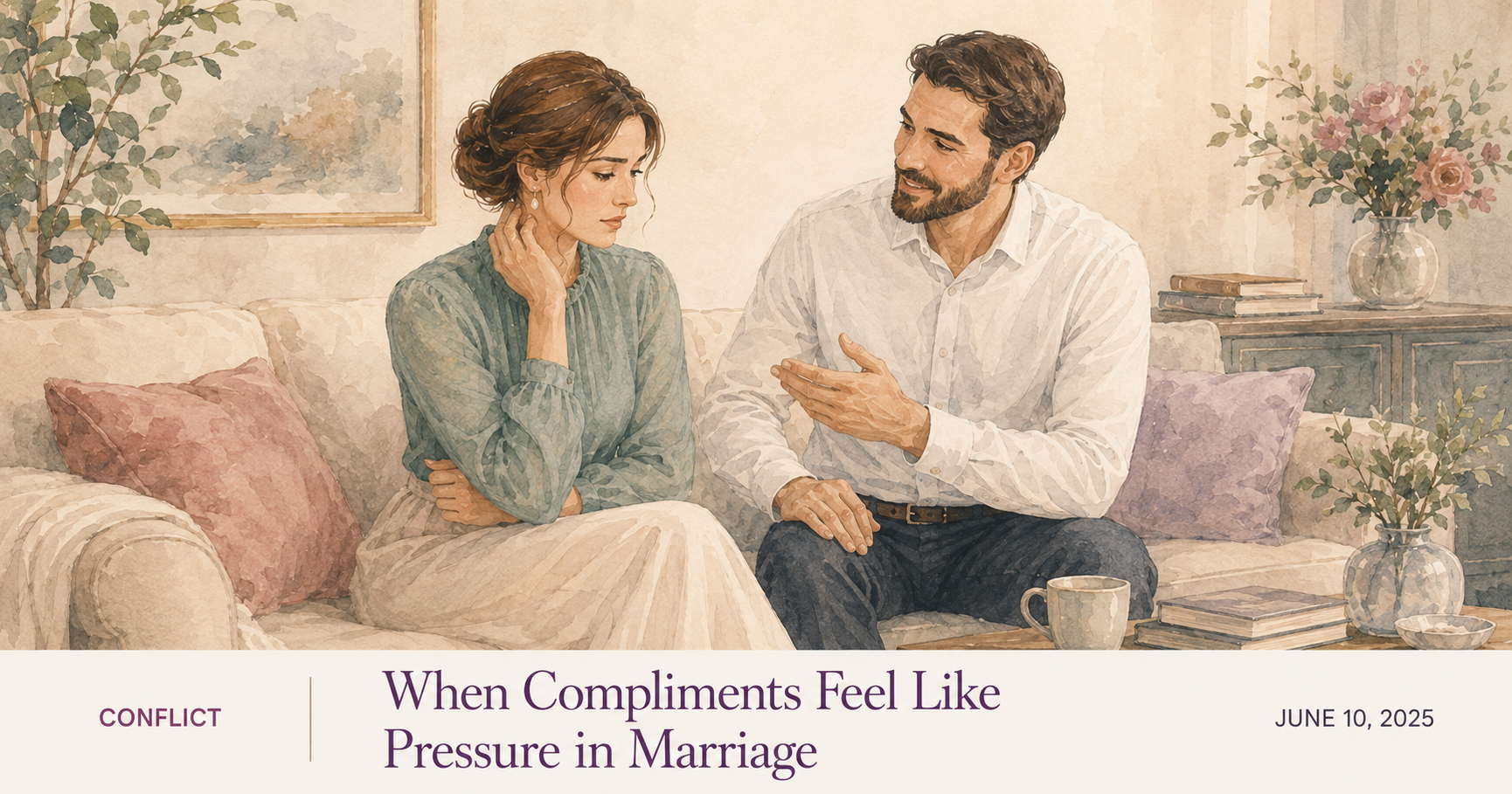
Why can a compliment feel like pressure instead of appreciation?
A compliment can feel like pressure when it carries an expectation, comparison, hidden criticism, or demand for a particular response. Appreciation lands better when it is specific, sincere, and freely given.
A woman once told me, “I praised him in front of the kids—and he snapped at me.” She had meant well. Her husband had just stepped in to help with bedtime after a long day at work, and she genuinely wanted to acknowledge him. So she said, “You’re so good at handling bedtime. I don’t know how you do it.” But instead of smiling or soaking in the praise, he turned cold. “Why are you making a big deal out of that?” he muttered. Later, he told her, “You sounded sarcastic. Like you were trying to prove, I don’t usually help.” She was hurt, and he was defensive. A moment that could have brought them closer instead pushed them apart.
This happens more often than we think. We’re taught to give compliments, express gratitude, and say thank you. But what happens when our praise, meant as kindness, feels like criticism in disguise to the other person? When Praise Misses the Mark It’s easy to assume that compliments are always welcome. But in marriage, how we praise is just as important as the words themselves. Some spouses feel uplifted when complimented. Others feel judged or even embarrassed.
Some hear “I appreciate you,” while others listen, “You never do this, so when you finally do, I need to make a big deal out of it.” The difference often comes down to this: How do they receive appreciation? If we don’t understand that, our best efforts may fall flat or cause tension. Why Does This Happen? Here are three common reasons why praise gets misinterpreted: 1. Tone and Timing If a compliment is delivered in front of others, your spouse might feel exposed or patronized, especially if it highlights something they feel insecure about.
Even a well-meaning comment can sound like, “Look how amazing he is—he did something helpful today!” 2. Unspoken History Some couples have a long-standing pattern where one partner feels unseen or criticized. In that dynamic, even praise can feel suspicious: Why now? What’s the hidden message? 3. Different “Appreciation Languages” Just as people have different love languages, they also have different appreciation languages. One person may value verbal affirmation. Another might prefer a quiet thank-you, a warm glance, or a thoughtful action. If we don’t speak their “dialect,” our words may not register as sincere. What Can You Do?
If your compliments sometimes cause confusion—or worse, conflict—here are a few tools to help reset the tone: 1. Ask Directly Gently ask your spouse: “What kinds of things make you feel genuinely appreciated?” You may hear surprising answers. One husband told me, “When you trust me to handle something without jumping in—that’s my appreciation.” Another said, “I don’t need a thank-you. Just don’t redo it after I do it.” 2. Observe What They Praise in Others People often give the kind of praise they wish to receive.
If your spouse compliments someone for being dependable, selfless, or calm under pressure, that may reveal what they value most in themselves—and what kind of recognition they hope for. 3. Test and Learn Try different forms of appreciation and watch how your spouse reacts. Say something small and sincere—like, “I noticed how patient you were with the kids tonight.” Or leave a short note. The goal is not to impress, but to connect. 4. Go for Sincerity Over Showiness Praise isn’t performance. It’s connection. Keep it simple, honest, and heartfelt. It might raise suspicion instead of warmth if it sounds exaggerated or theatrical.
My Reflection Praise is like perfume. When used gently, it enhances. But if overdone or sprayed at the wrong moment, it can overwhelm. In marriage, compliments work best when they meet a fundamental emotional need, not when they check a box or make a point. There’s nothing wrong with telling your spouse they did a great job. Noticing and naming good is a powerful builder of trust and connection. But it’s even more powerful when delivered as they want to be seen. The goal isn’t to stop giving compliments. It’s to fine-tune them—to make them land with the warmth and meaning you intended.
Try This at Home Next time you’re tempted to compliment your spouse, pause for one extra second. Ask yourself: - Will this make them feel seen or spotlighted? - Am I saying this to connect—or to correct? - Does this match their appreciation language, or does it match mine? Then, after the moment, circle back. Ask gently: “Did what I said come across as I meant it?” This small question can open big conversations—and help you feel more understood. Because in the end, the right words, said the right way, can be more than kind. They can be healing.
Frequently Asked Questions
How can I give a compliment that feels safe?
Name one real quality or action you appreciated without adding advice, comparison, or an expectation that your spouse respond in a certain way.
How can couples apply this insight?
Begin with one calm conversation and one small, repeatable action. Focus on the shared pattern rather than blaming either spouse.
Keep going, together
Full access to every plan, practice and check-in in the Emotional Marriage Method. Small steps you can actually do, in the middle of a real week.